
Smart Glasses Are Back! Time to Grade My Predictions.
In 2013, when Google Glass arrived, I wrote an article in which I imagined how smart glasses would change the way a job interview would play out in 2020:
“Soon, your interview turns into a nightmare, as your career is – literally – on display. You watch in disbelief while past events scroll by: The time you had a disagreement with a co-worker, the customer meeting you made an error that infuriated the client so much you almost lost the account. That one office party where you drank one too many. The meeting you got so frustrated you walked out. Events you had forgotten all about are now being used to paint a picture of your career.”
I also warned that because of smart glasses, this wasn’t as far-fetched as people thought:
“From now on, people wearing glasses can track, trace and store anything in their line of sight, unbeknownst to the people around them. Including you, wherever you are, whatever you are doing.”
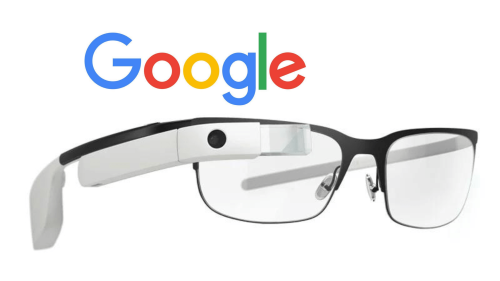
Two years later, Google discontinued the product over privacy concerns, safety considerations and its terms of service. But the company has not given up: they will launch new AI-powered glasses in the fall, now rebranded as “intelligent eyewear.”
Intelligent glasses have arrived. Meta has sold over eight million Ray-Ban smart glasses and just launched a new line starting at $299. Snap is launching Specs, its augmented reality glasses, at $2,195. Apple just confirmed Airpods with cameras. What I wrote about as a future possibility is now in the hands of consumers. So, as I was reading through my old blogs, it seemed like the right time to grade my predictions. What did I get right, what did I get wrong, and which part of that 2013 piece is still valid today? Spoiler alert: it’s about your HR policies!
What I got right
Let me start with the observation from 2013 I was spot on:
“I’m pretty sure one of the first hacks will remove that pesky blinking light that shows that the camera is on.”
Back in July, Meta rolled out a mandatory update that disables the camera entirely when the privacy light is broken or tampered with. Read that again: the company had to build a countermeasure because people are disabling the recording indicator on their smart glasses. I was right about this one, but it’s not a great win: people will tamper with the device for the wrong purposes. Social media are now full of videos made with these glasses that target unsuspecting people, especially women and minorities.
The second call that held up: invisibility. My assumption back then was that smartphones are visible recording devices (you notice someone filming), but glasses “will come in all shapes and sizes, and we won’t know whose glasses are on.” That is precisely the game Meta won and Google lost. Google Glass looked like a gadget with a camera. Meta’s glasses look like Ray-Bans because they are Ray-Bans, and the new collection comes with celebrity designer editions. The recording device didn’t just become a wearable. It’s becoming fashion, which is the most effective camouflage ever invented.

And the third: commercialization. In 2013 I asked what would happen when the company behind the glasses decided to monetize what flows through them. And not only that, but store everything you record for their own use. Meta just introduced a subscription that gates its glasses’ smarter features behind a monthly fee, with the free tier limited to a few hours of use. The sensor on your face now has a revenue plan. I’d love to claim clairvoyance, but honestly: this was not a hard prediction. Platforms monetize. That’s what they do.
What I got wrong
I assumed Google would see this through; instead, within a year, Google Glass died of social rejection. The word “glasshole” did what no regulator could have managed: it made the product unwearable. I underestimated how much social permission matters for face-worn technology, and the real lesson is: embarrassment can kill technology adoption. Meta understood that. It spent time making the glasses normal-looking and cool before making them smart. And even though they are now called “pervert glasses”, my guess is it won’t be enough to turn people off.
I also got the timeline wrong. My imagined hiring nightmare was set in 2020. The capability arrived more or less on schedule, but the adoption is only beginning now. I admit that while I recognized the direction, I can be a bit too optimistic about the timelines. Which is good news for you, because you had more time to prepare than I think. Did you use it?
What I underestimated
Here’s the part that matters most, and I’m going to put it in the “worse than I imagined” column. In 2013, my fear was storage: everything recorded, kept forever, waiting to be found in video archives someone could search through. But that was before Gen AI came along.
Because today we have inference. Today’s glasses don’t just record; they understand. They run AI assistants that can identify who or what you’re looking at, transcribe and summarize what you said, and turn raw footage into searchable, structured memory (Meta just filed a patent for AI facial recognition). My 2013 nightmare required a human to dig through hours of video to filter out your worst moments. The 2026 version is just a prompt: “Summarize every interaction with this colleague.” I’ve written before about how inference changes what organizations can find out about people by going through their online presence. And smart glasses combine that knowledge with your physical presence wherever you are. Don’t think this is a long way off: Wired discovered facial recognition code in Meta’s smart glasses app – which was deleted after Wired published their findings.
The two futures ahead
I want to mention the current market split, because the products on sale are selling two different futures. Snap’s Specs sell the future I called “exciting” in 2013: true augmented reality, with the digital layered over the real. Meta’s and Google’s glasses sell the other future: a camera, microphones, and AI on your face, all day. Connected to their servers to upload what you see, obviously.
Notice which future is expensive and which one is cheap. The exciting and more delightful one, the AR overlay, costs seven times more than the surveillance one. Capability follows price, so the recording-and-inference future arrives at scale first. That is the opposite of what I wished for, and exactly what workplaces must now deal with.
No time to waste
Which brings me to the one line from 2013 that has aged the worst:
“Start revising your company policies.”
Thirteen years later, eight million pairs of smart glasses were sold by one vendor alone. They are already in your building. And most companies still have not answered the basic questions: Can employees wear smart glasses in the office? In meetings? On the shop floor (recording your client’s data)? Can a manager wear them in a performance conversation? What happens when a works council member notices a colleague’s smart glasses are on during a sensitive consultation?
GDPR gave Europeans the right to be forgotten (that part of my 2013 piece became law), but it regulates the companies that are processing data, and it has little to say about an individual’s glasses quietly recording the conversations around her and storing them in a vendor’s cloud. The European Data Protection Board, which gathers privacy regulators across Europe, has ordered a report into smart glasses which should be finalized this summer. (Note that smart glasses couldn’t be sold in Europe because of the removable batteries requirement, but that has now been lifted.) Norway announced it is taking steps to regulate smart glasses over privacy concerns.
And let me make the HR case sharper, because this is not just a privacy compliance question. This is an accident waiting to happen: You will be dealing with grievances built on covert recordings. Or harassment cases where the evidence was gathered illegally and is explosive anyway. You will have meetings where nobody speaks because someone is wearing these glasses. Trust inside organizations was built on the assumption that conversations were fleeting unless someone openly made notes and told everyone else. That assumption is now false (and let’s not overlook the intrusion of silent AI notetakers either).
The irony is that these devices have genuinely good workplace uses, and I want to point that out: hands-free instructions for frontline workers, remote assistance for field technicians, accessibility features that are life changing. Banning the category outright would be both futile and wasteful. But don’t be mistaken: the vendors now use these features to sway public opinion while conveniently omitting the downsides, and while not taking action on bad actors. After all, that data is gold.
And that is why a proactive policy is your only answer. It means you get to decide: if you want these glasses in the building at all, where they’re allowed, where they’re not, what disclosure looks like, what happens to recordings, and who is in charge. The companies that write this policy now can calmly think things through. The rest will write it the week after their first incident, which is the worst possible moment.
Start revising your company policies (yes, again)
So, the final grade on my 2013 piece: I was right on the mechanism, right on the camouflage, right on the monetization, wrong on the company, wrong on the timeline, and not aware of what AI would do to the footage. As prediction scorecards go, I’ll take it.
But what I care about most is the policy recommendation. In 2013 I wrote it as advice. In 2026, with these devices selling in the millions and sitting unnoticed on noses in your meeting rooms right now, it’s overdue maintenance: start revising your company policies today! And make sure that everyone is aware of them and that includes visitors.
You will not have to wait long for the next chapter. Smart glasses will get cheaper, the inference will be sharper, and somewhere in between, a workplace incident involving smart glasses will make headlines and every HR department will scramble at once. You have a window to be deliberate about this before it becomes urgent. Use it. So that in 2039, when I grade this piece, I can finally mark my policy prediction as correct.